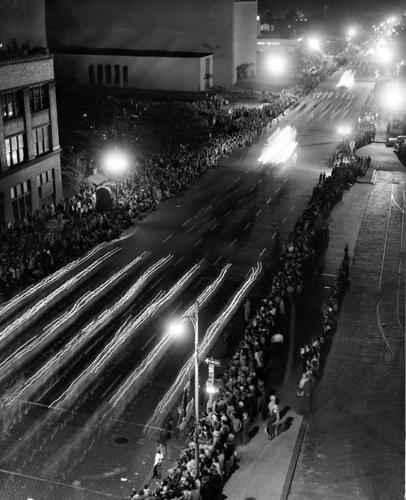

Before there were Disney’s nighttime theme-park parades and the old Orange Bowl evening spectacles down Biscayne Boulevard (remember those, Husker fans?), was the granddaddy of them all in Omaha?
People are also reading…
A generation of Omahans — and newcomers to the city — likely are unaware that Peony Park, the major amusement spot from the 1930s through 1994, was at 78th and Cass Streets.

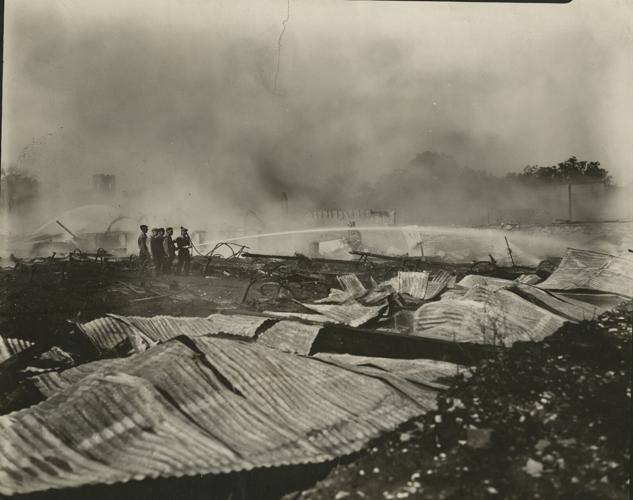
Beneath the melted mass of metal in the foreground are the remains of floats used in the Ak-Sar-Ben electrical parades. The picture was taken when fire had ravaged the entire building and not a wall was left standing.

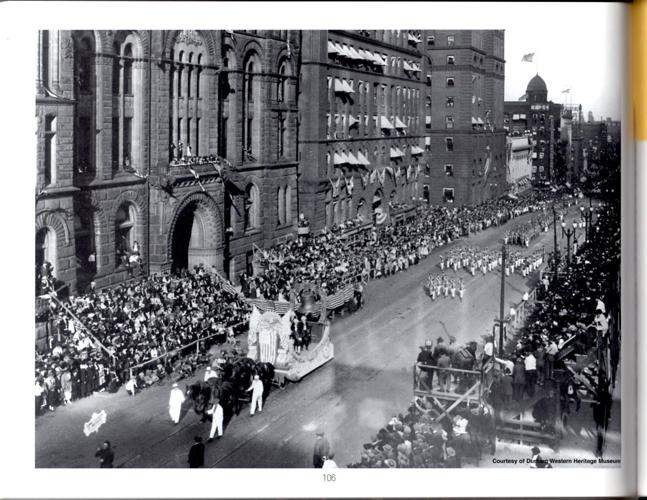
Large crowds gathered to watch the 1912 Ak-Sar-Ben parade.
PhotoFiles: 100-plus years of Boys Town
Boys Town

Boys Town, founded by Rev. Edward J. Flanagan as an orphanage in 1917, has been a beacon of humanity in Nebraska for nearly 100 years. Today a town in its own right, the organization dedicated to the care of wayward children and families had humble beginnings as a house in downtown Omaha, run by Irish immigrant Flanagan, who wasn't even a citizen.
Boys Town

The first home of Boys Town was this old brick residence at 25th and Dodge streets in Omaha. Flanagan brought his first five homeless boys there on Dec. 12, 1917, with a rent payment of $90 borrowed from a friend.
Boys Town

The first "Little Men of Boys Town" were these five children. Their names were not recorded, but the five were a mix of wards of the court and homeless newsboys from Omaha.
Boys Town

Boys Town quickly expanded. Flanagan took on more charges and was granted the help of some nuns from the local bishop. He moved his operations to this large residence on June 1, 1918.
Boys Town

In 1921, after a further swell in the number of his charges, Flanagan purchased Overlook Farm on the outskirts of Omaha and began setting up the Village of Boys Town. By the 1930s, he had hundreds of boys living at the site. The facilities are pictured on Nov. 28, 1939.
Boys Town

Boys Town continued to grow after Flanagan's death in 1948. From a single brick house in 1917, it would eventually become a town as its name suggested. Facilities pictured in December 1957.
Boys Town

You can judge the passage of time by the growth of the trees. The family-environment houses that were so visible in 1957 are obscured by foliage in 1990.
Boys Town

Boys Town is quite beautiful at ground level. It took years to cultivate, but the boys' work paid off with the Garden of the Bible, pictured in 1991.
Boys Town

It may have taken too long, but eventually Boys Town began accepting girls into its care. Pictured are the first five female graduates of Boys Town on May 27, 1983. Holding a picture of the original five boys of Boys Town, the girls are (from left) Cindy Koppenhaver, Jeanette Hoer, Joni Bachelor, Lisa Bordogna and Diana Luce.
Boys Town

Boys Town has an unofficial motto. You may have heard it paraphrased in an old Hollies song. It is "He ain't heavy, Father... he's my brother." It adorns the base of this now-famous statue at Boys Town and may have had its roots in a real incident involving Flanagan.
Boys Town

The sculpture, quote and story surrounding them are supposedly inspired by the boys in this photo, taken in the early 1920s. The boy wearing leg braces was admitted to Boys Town in 1919. Because he had difficulty walking, other boys would often carry him around on their backs. They were all his "brothers." Supposedly, when Flanagan asked the boy carrying the other boy if he could bring a wheelchair for the younger, the older simply replied, "He ain't heavy, Father ... he's my brother."
Boys Town

Flanagan practices with his choral group at Boys Town in 1946, two years before his death. Music has been an important part of the curriculum at Boys Town from its inception.
Boys Town

Rev. Francis P. Schmitt, a successor of Flanagan, practices with Boys Town choir members as they dress for a performance in 1963.
Boys Town

More than music, the core of Boys Town's curriculum has always been teaching boys a trade and giving them a sense of self-reliance. These boys in 1954 load bales of hay from their own fields onto an elevator to store in their barn. The bales will eventually feed their livestock.
Boys Town

Boys learn offset printing techniques from instructor Edwin Novotny, a former resident of Boys Town, in 1966.
Boys Town

A future mechanic learns engine repair techniques from instructor George Novak in 1966.
Boys Town

Ralph Forke teaches radio and electronics repair to a Boys Town resident in 1966.
Boys Town

Boys Town has had its share of famous visitors throughout its history. Actors, athletes, politicians and others have shown up from time to time both to honor the work of Flanagan and to lift the spirits of the children at the home. Eleven-year-old James Gutierrez gets a lift from actor Gavin MacLeod as Boys Town Director Rev. Val Peter laughs in the background in 1987.
Boys Town

Former Washington Redskins quarterback Joe Theismann pays Boys Town a visit in 1987.
Boys Town

First Lady Nancy Reagan gets roses and a hug from Boys Town resident Monica White in 1986.
Boys Town

Vice President Hubert Humphrey is escorted to the stage by 8-year-old Randy Slothoer before speaking at the graduation of 110 Boys Town boys in 1967.
Boys Town

Part of the success of Boys Town's curriculum is the employment of "family teachers." The residents live in houses of 8-10 youths with their "family teachers" standing in for biological families. Each day, the students take part in a group evaluation of their performance at "home" and at school with their "family." Nadiyah Seraaj (right), a Muslim, was a family teacher at Boys Town with her husband, Abdul, in 1982. She and her charges listen as Abdul (not pictured) goes over the problems of the day.
Boys Town

A very young Boys Town boy sits in a window at his home. The rounded plexiglass windows were designed to allow young charges to sit in them and ponder the outside.
Boys Town

Rev. Edward J. Flanagan was laid to rest in a shrine at the place he loved most, Boys Town. A new shrine was built around his tomb in 1976. Then-director Rev. Robert P. Hupp kneels at Flanagan's tomb to pray.
Boys Town

Nearly 100 years after its founding, Boys Town continues Flanagan's vision of offering a place for wayward children and orphans to find a sense of family, learn life skills and become contributing members of society. A crisp fall morning greets three Boys Town boys as they walk across the campus on their way to school in 1976. It's a scene that started in 1917, and one that is still playing out to this day.