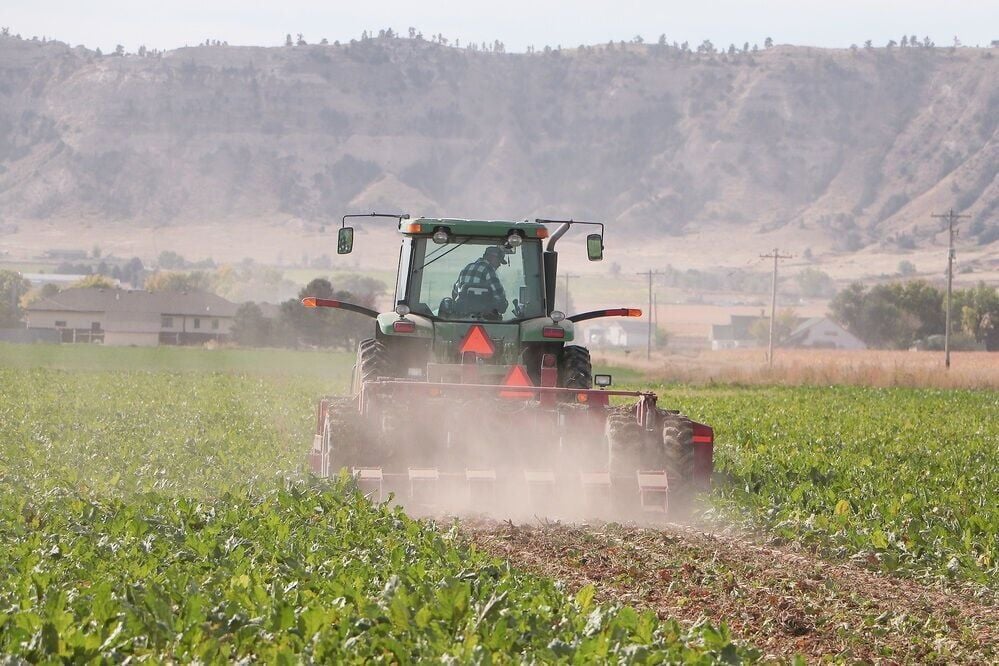
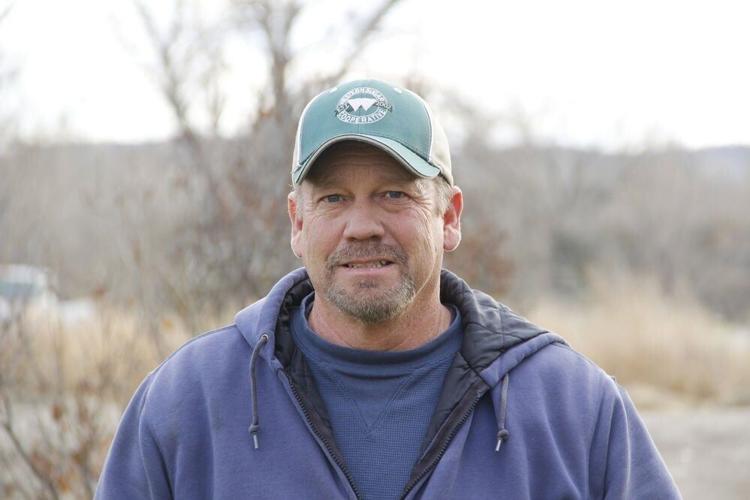
Kendall Busch tops sugar beets so that his father Robert Busch could come up behind him and harvest the beets during early harvest in October 2021. Kendall is a fourth-generation sugar beet farmer in the area.
The story of the Nebraska Panhandle is rooted in sugar beets. For generations, the crop attracted immigrants seeking opportunity and a place to call home, leaving a lasting imprint on the communities, traditions and culture of western Nebraska.
Kendall Busch still farms in the Mitchell valley. His grandmother, Lydia Busch, and his father, Robert Busch, were among the first generations of German Russians to settle in the early 1900s.
Star-Herald File Photo
kA 4=2DDlQ:D$6=64E65t?5Qm“|J 8C2?5>@E96C[ D96 24EF2==J H@C<65 2E 366E 7:6=5D 2?5 E9:??65 366ED 324< E96?[” z6?52== qFD49 D2:5]k^Am
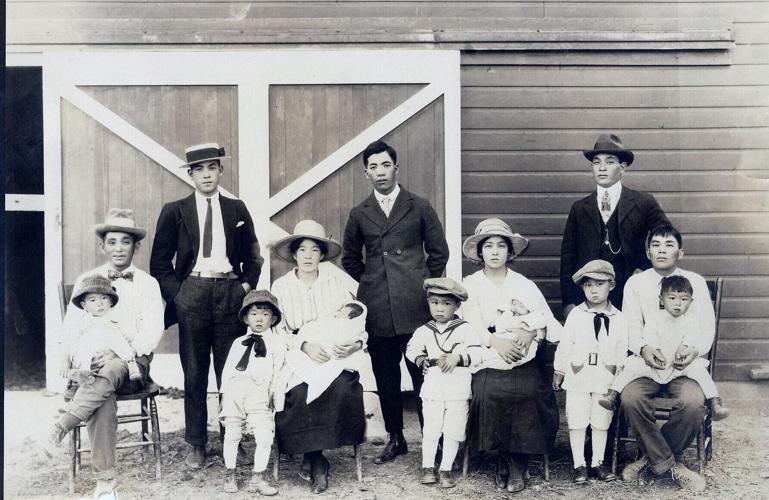
Members of the Shiba and Sakurada families circa 1921, including Vickie Schaepler's father, sitting on a lap on the far right side of the picture. Schaepler's family followed other members of their Japanese immigrant family to the Panhandle, looking for opportunity in sugar beet farming.
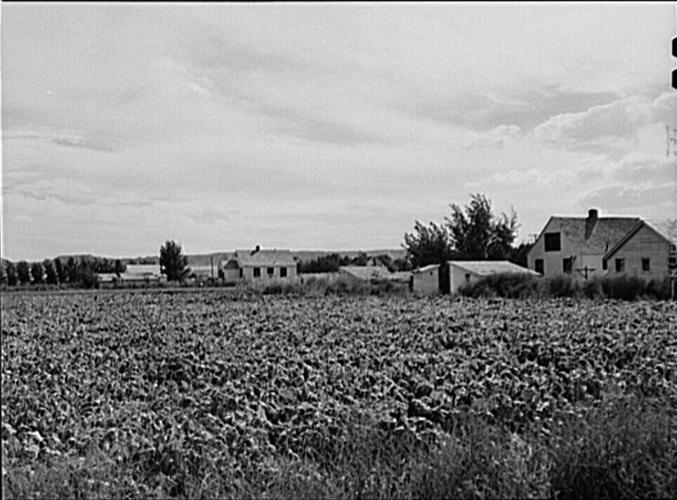
A sugar beet field and homestead are pictured in the Scottsbluff area in 1944. In the 1940s, Mexican immigrants participating in the bracero program largely made up the field labor that harvested the fields by hand.
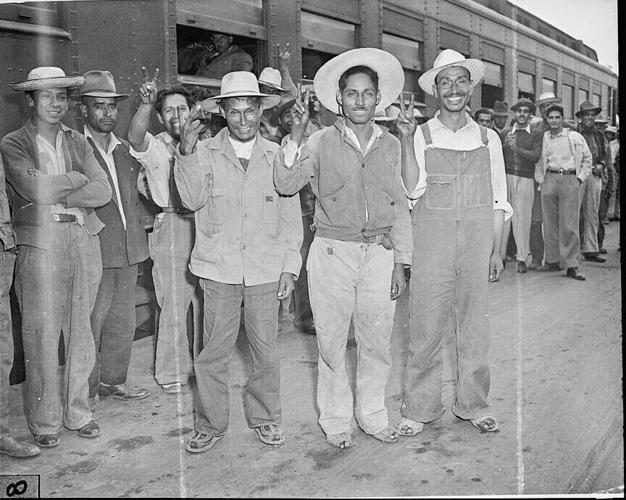
Mexican workers recruited and brought to the Arkansas valley, Colorado, Nebraska and Minnesota by the FSA (Farm Security Administration), to harvest and process sugar beets under contract with the Inter-mountain Agricultural Improvement Association.
Kendall Busch tops sugar beets so that his father Robert Busch could come up behind him and harvest the beets during early harvest in October 2021. Kendall is a fourth-generation sugar beet farmer in the area.
Members of the Shiba and Sakurada families circa 1921, including Vickie Schaepler's father, sitting on a lap on the far right side of the picture. Schaepler's family followed other members of their Japanese immigrant family to the Panhandle, looking for opportunity in sugar beet farming.
Kendall Busch still farms in the Mitchell valley. His grandmother, Lydia Busch, and his father, Robert Busch, were among the first generations of German Russians to settle in the early 1900s.
A sugar beet field and homestead are pictured in the Scottsbluff area in 1944. In the 1940s, Mexican immigrants participating in the bracero program largely made up the field labor that harvested the fields by hand.
Mexican workers recruited and brought to the Arkansas valley, Colorado, Nebraska and Minnesota by the FSA (Farm Security Administration), to harvest and process sugar beets under contract with the Inter-mountain Agricultural Improvement Association.