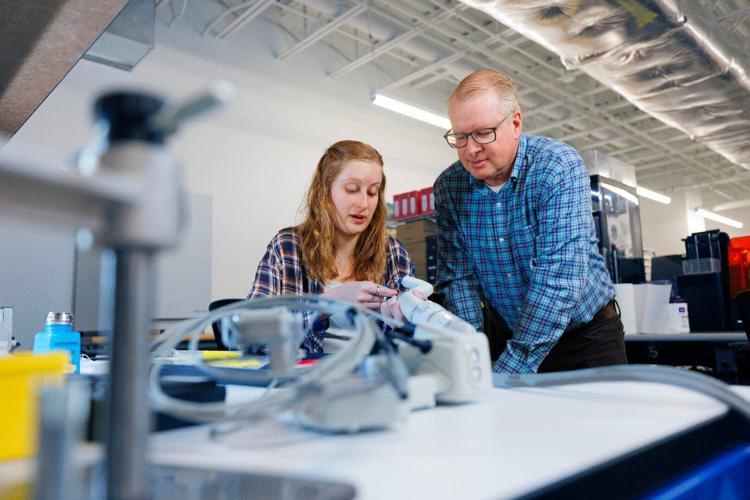
Rachael Wagner and Shane Farritor look over a robotic surgery device in the Virtual Incision facility in November 2022. Wagner, a University of Nebraska-Lincoln doctoral student who served as the project engineer, said watching the SpaceX rocket lift off into the clear blue skies was “living a little bit of a dream.”
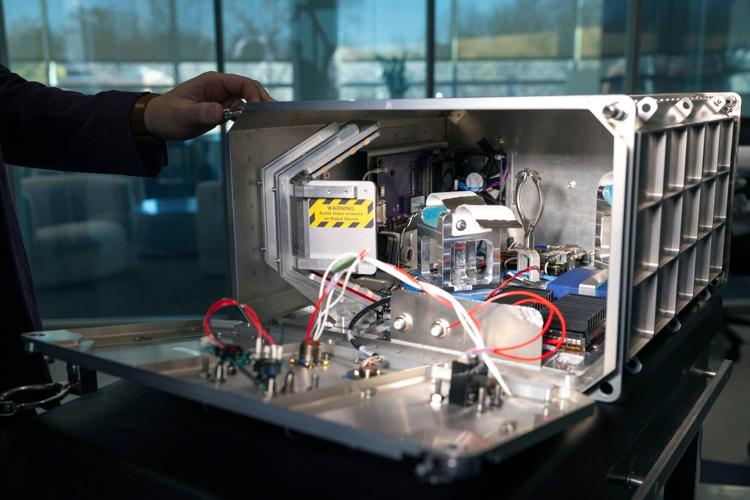
A replica of the spacefaring capsule, designed to carry a miniaturized surgical robot developed in Nebraska, displayed at the Virtual Incision office in Lincoln, where employees watched the launch of the SpaceX Falcon 9 rocket carrying the robot on Tuesday.
University of Omaha seniors Lunas DeGraw (center) and Max Trenhaile (right) react as they watch a rocket carrying a surgical robot developed in Nebraska on a operational cargo mission to the International Space Station at the Virtual Incision office on Tuesday.
kAm“$66:?8 :E 8@ FA E@ DA246 :D ;FDE AC@@7 E92E E96 A6@A=6 2E }p$p E2<6 :E D6C:@FD=J[” 96 D2:5]k^Am
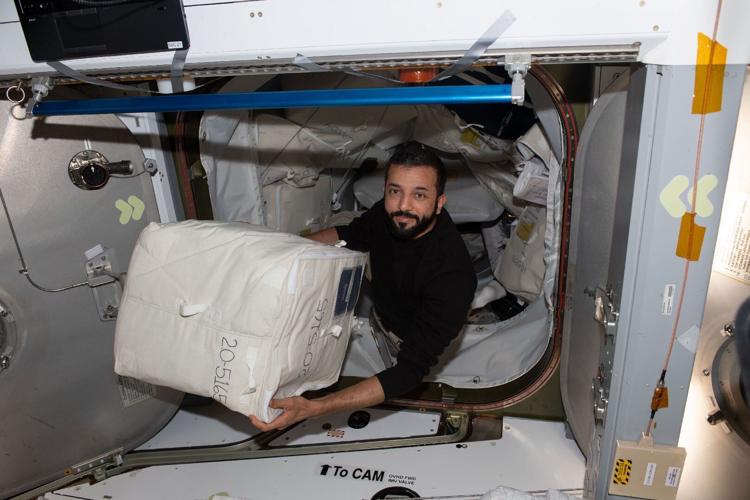
The space robot will sent into space in a similar-sized box as shown in this photo from a June, 2023 flight. The astronauts will unload the Dragon Cargo vehicle and move it into the International Space Station.
NASA/Tony Gray, Tim Terry, and Kevin O'Connell
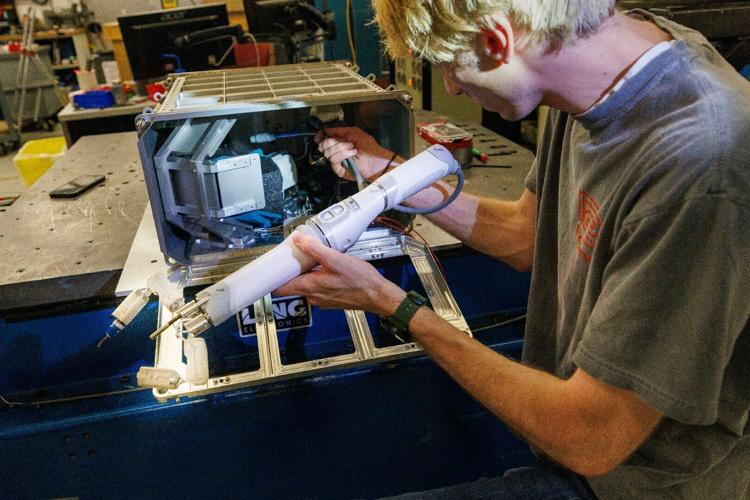
Sean Crimmins, senior in engineering, loads the robotic arm into its case before the shake test in August. Virtual Incision is sending its surgical robotic art to the space station. Virtual Incision employees had the arm and the case that will take it into space tested at Lincoln’s NCEE labs.
Rachael Wagner and Shane Farritor look over a robotic surgery device in the Virtual Incision facility in November 2022. Wagner, a University of Nebraska-Lincoln doctoral student who served as the project engineer, said watching the SpaceX rocket lift off into the clear blue skies was “living a little bit of a dream.”
A replica of the spacefaring capsule, designed to carry a miniaturized surgical robot developed in Nebraska, displayed at the Virtual Incision office in Lincoln, where employees watched the launch of the SpaceX Falcon 9 rocket carrying the robot on Tuesday.
University of Omaha seniors Lunas DeGraw (center) and Max Trenhaile (right) react as they watch a rocket carrying a surgical robot developed in Nebraska on a operational cargo mission to the International Space Station at the Virtual Incision office on Tuesday.
The space robot will sent into space in a similar-sized box as shown in this photo from a June, 2023 flight. The astronauts will unload the Dragon Cargo vehicle and move it into the International Space Station.
Sean Crimmins, senior in engineering, loads the robotic arm into its case before the shake test in August. Virtual Incision is sending its surgical robotic art to the space station. Virtual Incision employees had the arm and the case that will take it into space tested at Lincoln’s NCEE labs.