Take a look back a few moments from the early days of the Omaha zoo.
People are also reading…

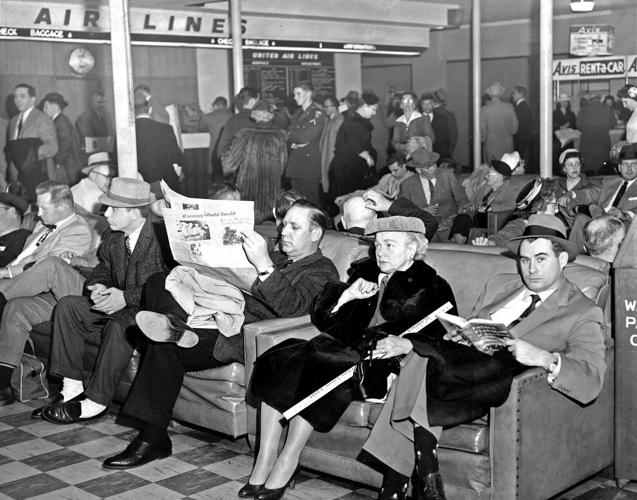
The waiting room seating at Omaha Municipal Airport was at a premium on Jan. 14, 1959, due to fog delays.

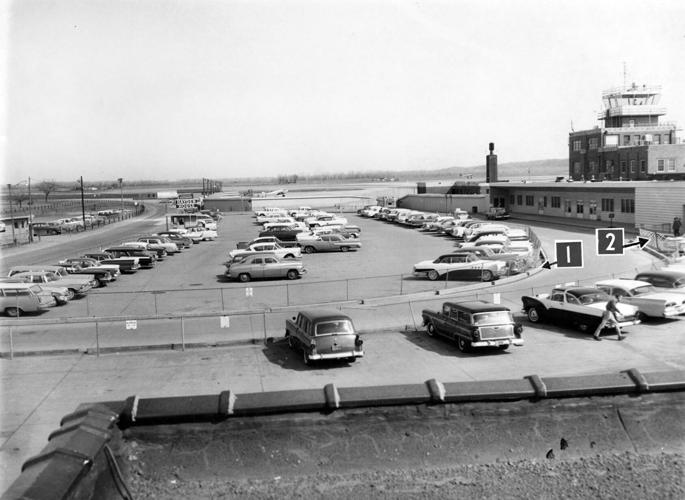
The parking lot at Omaha Municipal Airport parking lot on March 26, 1958.
Stories of Omaha's history by Stu Pospisil

The Benson and the Hanscom are only two of the more than 70 theaters that sprung up outside downtown Omaha during the first half of the 20th century. The majority opened — and closed — during the era of silent films.

Omaha’s first auto club, formed in 1902, included 20 of the city’s 25 auto owners. Their first activity was a road rally to Blair and back.

Take a look back at the history of the Chermot Ballroom and some of the big names that played there.

The New Tower’s front lobby had a Normandy castle motif with great stone walls, heraldic crests and wood-burning fireplace. The massive beams and lofty ceilings carried over into the Crest Dining Room.

A generation likely are unaware that a major Nebraska amusement spot was in Omaha. During the Big Band era, Duke Ellington, Cab Calloway and Guy Lombardo, played the Peony. So did one-time Omaha farmer Lawrence Welk.

Burial grounds are scattered across Douglas County — downtown, near downtown, on the Nebraska Medical Center campus, near the Field Club and several in the western part of the county near Valley.

The fame of Curo Springs was so far-reaching that in pioneer days — every fall and spring — people from 100 miles away (some crossing the Missouri in crude boats) would come to load up with the water.

Here are some books relating to Omaha and Nebraska history, many by local authors, to check out.

They were the twin banes in Omaha’s pioneer years. One of them came back to life during the nighttime deluge that hit the area recently.

The Omaha Chamber of Commerce was prepared to remove its $35,000 hangar — built in modular sections — until the city was ready to build a municipal airport. Then came back-to-back windstorms.

Research has turned up a juicy nugget — the whereabouts of the burial site of Omaha, the Triple Crown horse in 1935. Hint: there are people resting every night on top of it.

Keystone has become the name applied to the area bounded by 72nd and 90th Streets, Maple Street, Military Avenue and Fort Street. It has expanded since Keystone Park was platted in 1907.

Ezra Meeker’s crusade is credited for reawakening awareness of the Oregon Trail in the early 20th century. In the process, he erroneously linked Omaha to the trail and others took his word for it.

An Omaha real estate firm had the idea in the heyday of the '20s that it could sell 1,500 cottage lots platted away from the lakes and the Platte River. So what happened?

Check out a glimpse of Omaha’s Black history before 1880.

The Dan Parmelee-Tom Keeler feud, which included an Old West shootout on the outskirts of old Elkhorn in December 1874, left Keeler dead and made news nationwide.

In the 1950s and 1960s, Omahans had their pick of drive-in movie theaters. Cars with families and cars with teens -- some watching the film and others, well, you know -- side by side, wired speakers hanging inside a car door.

Clontarf never was incorporated as a village, but it functioned like one and wielded political clout larger than its 47 acres. There was a lawless element, too.

'Mascotte was a big joke, but it looked good while it lasted.' The village had a factory, railroad depot, hotel, general store, school and about 40 cottages. By 1915, it was all gone.

West Dodge Road has been rebuilt over and over. And along the way, the Old Mill area has lost its mill, its hazardous Dead Man’s Curve and the most beautiful bridge in the county.

Many Omahans of a certain age remember visiting Santa at Toyland in the Brandeis department store. The tradition dated to the 1900s when J.L. Brandeis and Sons were the proprietors of the Boston Store.

That idea to move traffic from 30th Street has been bandied about since the 1930s.