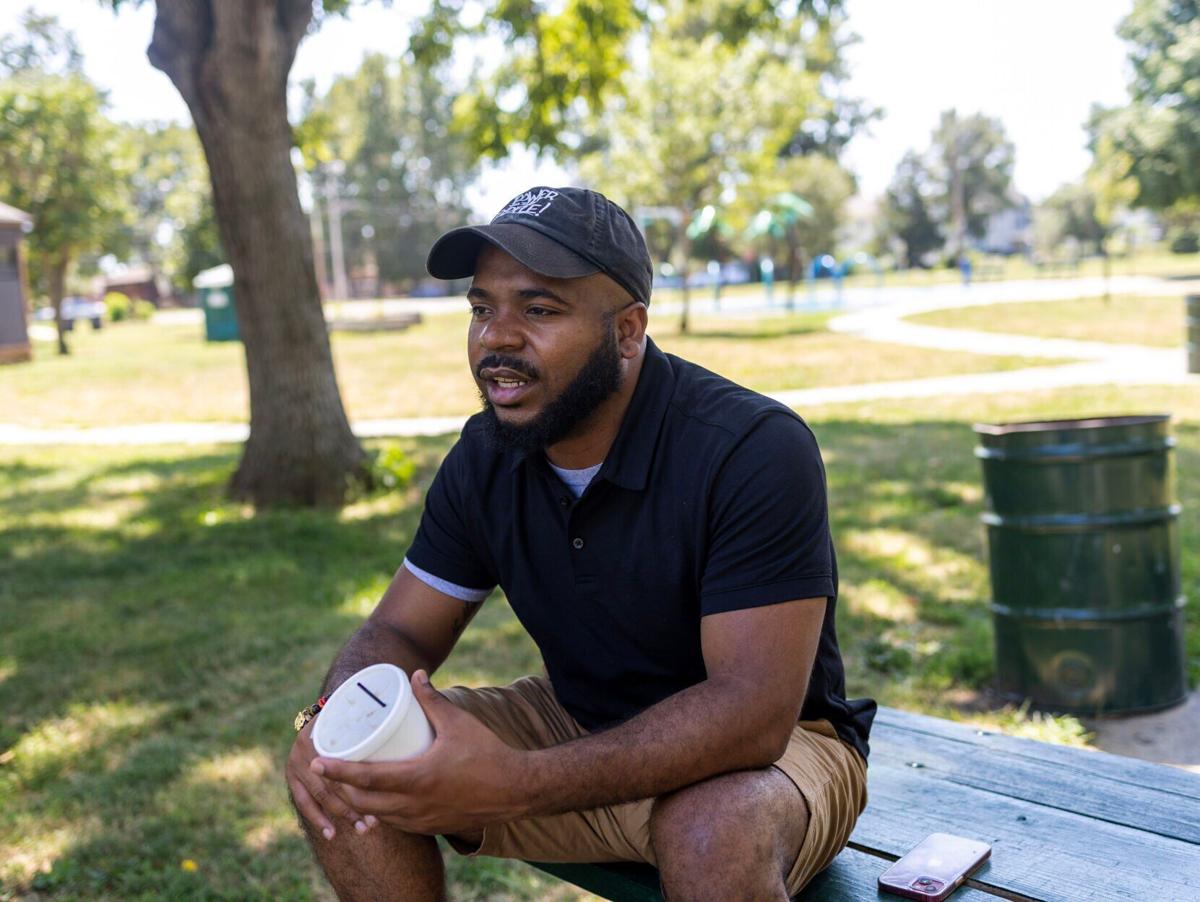
Sen. Terrell McKinney is determined to continue to argue for improved programming at Nebraska prisons in an attempt to prepare prisoners to safely return to society with the skills needed to live productive lives as a much better policy choice than building a huge and costly new state prison.
People are also reading…
For more than three weeks, prisoners in Alabama went on strike refusing to work and demanding humane prison conditions. Alabama's prisons have some of the highest rates of homicide and rape in the country, according to a 2019 Department of Justice report. The Department of Justice has called the state "deliberately indifferent" to prisoner harm. During the strike, social media posts from inside showed prisoners refusing to cook, clean and carry out other administrative tasks in dozens of facilities across the state. In response, the Alabama Department of Corrections cut the number of meals served per day from three to two, served cold meals rather than hot ones and cut visitation at various facilities. Prisoner advocates claim the changes were a form of retaliation against the strike. The Alabama DOC said it made these changes because of the loss in manpower. Either way, all of this highlights just how critical prison labor has become not just in Alabama but across the country. Yale professor and attorney Claudia Flores co-authored a nationwide report on prison labor. "Put a captive group of people in a prison where their jailer and employer are the same entity without any supervision, and without any standards, and it's not that surprising that you end up with really abusive and exploitative situations," said Flores. Her study found 65% of inmates, roughly 800,000 people, report working behind bars. And more than 75% of inmates surveyed said they have been punished for refusing to work. "There are all sorts of ways that people were coerced into doing work; sometimes their free time would be taken away from them, sometimes they would have privileges taken away from them, sometimes they would just be straight up forced, and if not, they were punished," said Flores. Sam Nathaniel Brown spent 24 years in prison before being released on parole. But Brown's last job behind bars forced him to the front lines of the COVID pandemic. SEE MORE: DNA Evidence Frees California Man Imprisoned For Decades"Before I came out, the last job that I had was a health care facility maintenance worker," said Brown. "I was one of the first people in the state in a causal setting to have to disinfect and clean a cell and an office where a staff member, and then a prisoner, tested positive for COVID-19, so I was terrified for my life." Brown said when he refused to work, he was threatened with a disciplinary measure that would have made him ineligible for parole for an additional eight years. "I would have been looking at a minimum of eight years period. Just because I didn't want to risk my life to go clean up COVID-19 and I couldn't say no," said Brown. Because of his experience during the pandemic, Brown drafted an amendment to the California constitution from his prison cell; The California Abolition Act (ACA 3). The amendment called for an end to involuntary servitude across the state. Like the 13th amendment to the U.S. Constitution, California is one of 20 states nationally that allows involuntary work as a criminal punishment. "Being incarcerated is the punishment. So, if you commit a crime, your freedom is taken away, that's the punishment. It's not, and now, we're gonna force you to mop floors, and we're gonna force you to fight fires without proper equipment, or whatever it is that's happening," said Flores. "There is no place for slavery, involuntary servitude on our books," said the California State Assembly. Brown's amendment was picked up by California State Senator Sydney Kamlager and made its way through the state legislature. Supporters of prison labor have pointed to job experience as the real benefit of working behind bars and raised concerns that increasing prisoner pay would be unsustainable financially. Brown's amendment to the California constitution stalled after the State Department of Finance estimated it would cost $1.5 billion in 2022 to pay the state's $15 minimum wage to incarcerated Californians. Despite ACA 3 not going the distance, other states are following Brown's lead. Voters in Tennessee, Alabama, Louisiana, Oregon and Vermont are all going to vote on a version of this proposal in November banning involuntary servitude for everyone, including those convicted of a crime. Colorado, Nebraska and Utah have already removed the language from their state constitutions via a statewide ballot measure.
Photos: Nebraska's new Reception and Treatment Center

Reception and Treatment Center warden Taggart Boyd talks about a new dining area at Reception and Treatment Center on Wednesday.

Inmates were injured during a pair of fights this week at the Reception and Treatment Center in Lincoln.

Reception and Treatment Center warden Taggart Boyd talks about new maximum-security prison beds during a tour of the facility Wednesday.

A body scanner is seen at the public entrance of the Reception and Treatment Center on Wednesday.

Reception and Treatment Center warden Taggart Boyd leads a tour of the new prison on Wednesday.

Part of a prison expansion project that includes 384 new prison beds is seen in this photo taken at the Reception and Treatment Center on Wednesday.

Five staff members at the state's Reception and Treatment Center were treated at a Lincoln hospital after they were stabbed by three inmates Wednesday. The center opened last May, combining two state prisons into one massive complex.

A mental health wing at the Reception and Treatment Center seen on Wednesday.

The new Reception and Treatment Center includes a "blind feed" food line.

A prison courtyard at Reception and Treatment Center.

A dining area at the Reception and Treatment Center seen on Wednesday.

The public entrance to the Reception and Treatment Center.

A program room is part of a 384-bed expansion project at the Reception and Treatment Center.

Construction is ongoing at the Reception and Treatment Center in southwest Lincoln.

The Reception and Treatment Center includes 384 prison beds.

A mental health wing at Reception and Treatment Center.

A mental health wing at Reception and Treatment Center is seen under construction on Wednesday.

The Reception and Treatment Center has a mental health wing.

The new kitchen is seen at the Reception and Treatment Center on Wednesday.

Reception and Treatment Center warden Taggart Boyd talks about the center's new mental health wing.

Part of a prison expansion project includes 384 new beds.

Reception and Treatment Center warden Taggart Boyd talks about a new mental health wing at the center.

Reception and Treatment Center warden Taggart Boyd leads a tour of Nebraska's new prison.

Part of a prison expansion project that includes 384 new prison beds is seen in this photo taken at Reception and Treatment Center on Wednesday.

Five staff members at the state's Reception and Treatment Center were treated at a Lincoln hospital after they were stabbed by three inmates Wednesday. The center opened last May, combining two state prisons into one massive complex.

The new structure includes an intake center where nearly every man admitted into the state's prison system will be processed before assigned to a long-term location.

A hospice bed at Reception and Treatment Center is seen on Wednesday.

An on-site dental office is part of the new Reception and Treatment Center.

A skilled nursing bed at Reception and Treatment Center is seen on Wednesday.

A skilled nursing bed at the Department of Correctional Services' Reception and Treatment Center in Lincoln is seen in May 2022.

Reception and Treatment Center warden Taggart Boyd talks about a new mental health wing at Reception and Treatment Center on Wednesday.

An X-ray machine at the new Reception and Treatment Center.

An admission cell at the Reception and Treatment Center.