

WASHINGTON — The federal FAFSA form used to apply for college financial aid opened to high school seniors nationwide on Thursday, a year after a disastrous rollout by the Biden administration delayed the application for months.
People are also reading…
- Lincoln man cited for November fatal crash near Waverly, deputies say
- Nebraska football quarterback commit earns high praise at camp
- SEC meets at a crossroads — and its grip on college football is at stake
- Nebraska commit Trae Taylor named to 2026 Elite 11 Finals roster
- An ex-Nebraska coach watched from Northern Colorado’s bench. He says this team is title-bound
- Malcolm man dies after motorcycle crashes near Lincoln Airport during pursuit with State Patrol
- Former Nebraska head coach Scott Frost to host Husker commit for visit
- Rural Nebraska village aims to survive, grow with new housing efforts
- No. 6 Nebraska softball takes Big Ten lead with rout of Minnesota, Washington loss
- Lincoln record store faces threats after video shows staff smashing copies of new Ye album
- Nebraska baseball falls in Coaches Poll after weekend struggles
- Substitute teacher cited after disturbing comments at Raymond Central
- Nebraska volleyball notes: How NCAA's '5-in-5' affects NU's superstar seniors; spring portal opens
- What's happening with house prices in Omaha in 2026?
- Ohio State's seven home runs decimate Nebraska 10-1

- ANNIE MA Associated Press
The 2024-2025 school year saw a growing number of students at campuses nationwide. Undergraduate enrollment was up by 3.2% in the spring of 2025, according to the National Student Clearinghouse Research Center. That increase is all the more noteworthy when you consider the current price tag for a college education—per the Education Data Initiative, the average cost of one year at a higher education institution clocks in at more than $38,000 in 2022-23. Still, college offers a valuable return on investment for many prospective students. An analysis from the Federal Reserve Bank of New York found that in recent years, college grads earned a median of $80,000 per year, while workers with only a high school diploma earned a median of $47,000 per year.
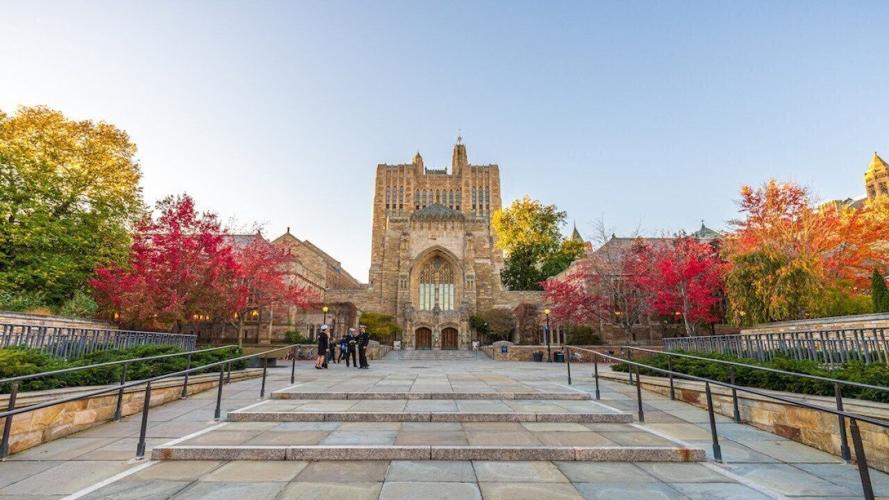
With this in mind, the return on investment may be more apparent at some schools than others. Stacker compiled a list of the best colleges in America using Niche's 2026 rankings. All four-year schools in Niche's database were considered. Niche ranks colleges using various factors, including academics, admissions, finances, and student life. You can check out the full methodology here.
- Winston Tan // Shutterstock
Best colleges in America

Best colleges in America
The 2024-2025 school year saw a growing number of students at campuses nationwide. Undergraduate enrollment was up by 3.2% in the spring of 2025, according to the National Student Clearinghouse Research Center. That increase is all the more noteworthy when you consider the current price tag for a college education—per the Education Data Initiative, the average cost of one year at a higher education institution clocks in at more than $38,000 in 2022-23. Still, college offers a valuable return on investment for many prospective students. An analysis from the Federal Reserve Bank of New York found that in recent years, college grads earned a median of $80,000 per year, while workers with only a high school diploma earned a median of $47,000 per year.
With this in mind, the return on investment may be more apparent at some schools than others. Stacker compiled a list of the best colleges in America using Niche's 2026 rankings. All four-year schools in Niche's database were considered. Niche ranks colleges using various factors, including academics, admissions, finances, and student life. You can check out the full methodology here.
- Winston Tan // Shutterstock


