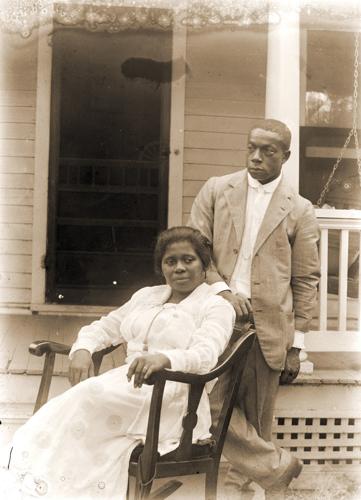
John Johnson, shown with wife Odessa in August 1918, photographed life in Lincoln, focusing on African Americans.
Photo courtesy of Douglas Keister
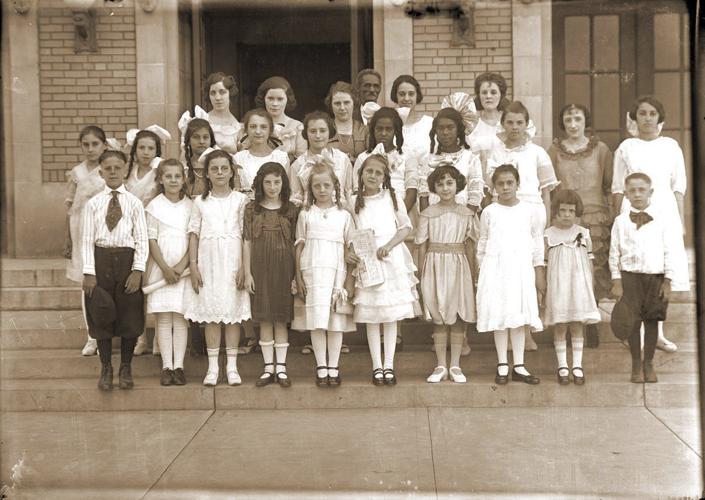
This scan of a glass plate negative made circa 1910-25 shows students in Lincoln. A number of the girls in the front row are holding piano music, indicating they may have been giving or attending a recital.
JOHN JOHNSON, Courtesy Douglas Keister
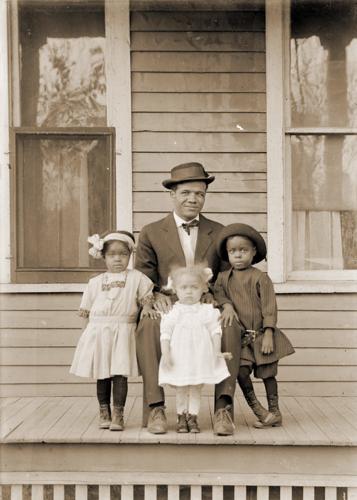
Manitoba "Toby" James had three daughters and two sons. Pictured with him here are his firstborn son, Mauranee (in the hat at right), and his daughters Myrtha (left) and Edna (center).
JOHN JOHNSON, Courtesy Douglas Keister
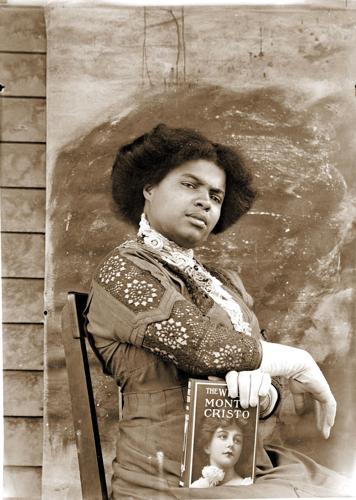
Mamie Griffin, who worked as a cook, lived at 915 U St. in 1914 with her husband, Edward, a waiter at the Lincoln Hotel. Their little house and other humble residences stood on a dirt street among railroad tracks and industrial uses north of downtown Lincoln. Far from humble are the dress and demeanor of this woman, posing confidently with her romance novel, "The Wife of Monte Cristo."
The photographer was born in Lincoln and spent his life in a frame house on A Street, where a red-brick apartment building with long, narrow windows has risen in its place.
This scan of a glass plate negative made circa 1910-25 shows students in Lincoln. A number of the girls in the front row are holding piano music, indicating they may have been giving or attending a recital.
Manitoba "Toby" James had three daughters and two sons. Pictured with him here are his firstborn son, Mauranee (in the hat at right), and his daughters Myrtha (left) and Edna (center).
Mamie Griffin, who worked as a cook, lived at 915 U St. in 1914 with her husband, Edward, a waiter at the Lincoln Hotel. Their little house and other humble residences stood on a dirt street among railroad tracks and industrial uses north of downtown Lincoln. Far from humble are the dress and demeanor of this woman, posing confidently with her romance novel, "The Wife of Monte Cristo."