

The University of Nebraska–Lincoln is a key partner in a collaboration involving about 70 institutions and organizations across Nebraska and Iowa that will create a bioeconomy-focused innovation ecosystem in the region's rural communities.
The National Science Foundation announced July 14 that the Iowa State University-led initiative, called RuralSTAMINA, has received $15 million in funding over the next two years, with potentially a total of $160 million over 10 years depending on initial progress.
As Nebraska's land-grant institution, the University of Nebraska–Lincoln is a core partner in the initiative: Ascending Rural Communities through Sustainable, Transformative, Advanced Manufacturing INnovations and Alliances. UNL and ISU are among about 70 public and private partners across the two states that will participate in RuralSTAMINA. In Nebraska, other core partners include Southeast Community College and Invest Nebraska. Partners also include Northeast Community College and Metropolitan Community College.
People are also reading…
Funding comes from the NSF Regional Innovation Engines program, which aims to support multiple flourishing regional innovation ecosystems across the U.S., spurring economic growth in regions that have not fully participated in the technology boom of the past few decades. The collaboration involving Nebraska and Iowa is one of 12 projects awarded in the program’s second cohort.
Forces in the agricultural economy
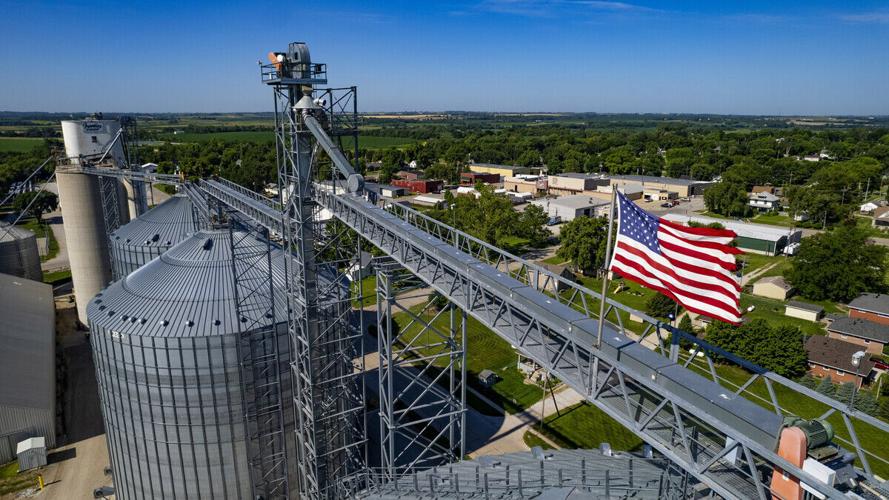
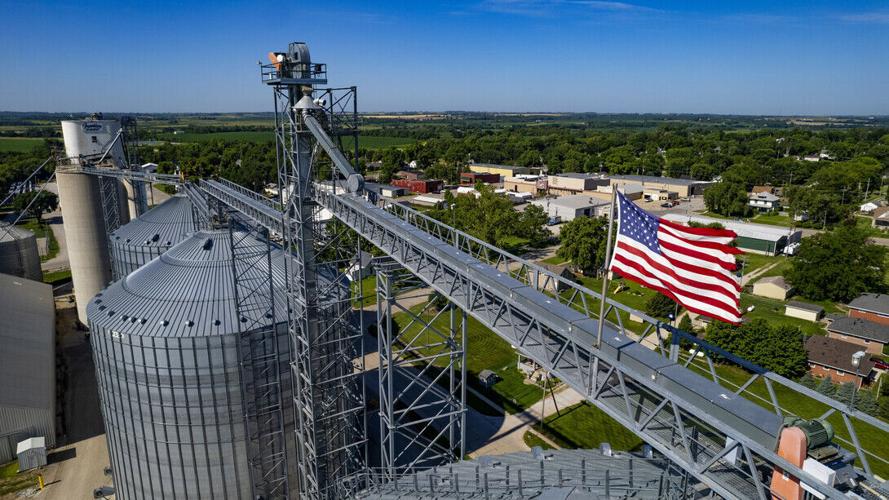
Together, both states represent the largest agricultural economy in the United States. RuralSTAMINA aims to build on those powerful economies by developing and commercializing innovations in biomass conversion and biomanufacturing — and developing an advanced manufacturing workforce — to create new value-added products from commodities grown in the region. Nebraska’s Nicole Buan, professor of biochemistry, said the current bioeconomy worldwide is about a $4 trillion market, projected to grow to $10 trillion in the next five to 10 years.
“We’re hoping that we’ll be really competitive” as that growth occurs, she said. RuralSTAMINA will leverage federal investment to bring together academia, local and state government, industry, and venture capital to position Nebraska and Iowa to lead in this field.
A new paradigm
Jen Nelson, vice chancellor for research and innovation at Nebraska and co-principal investigator for RuralSTAMINA, said projects funded through NSF Engines are not typical research grants. Instead, they are designed to catalyze innovation ecosystems across regions, bringing together partners from multiple sectors to spur economic development and capacity building.
Dan Hoffman, chief executive officer of Invest Nebraska and a member of the RuralSTAMINA leadership team, said NSF, over the past couple of presidential administrations, has focused on a more macroeconomic perspective that includes private industry earlier in the research and development process in advancing biomanufacturing.
“It’s a little against the grain” of what universities are accustomed to, Hoffman said. But this approach is key because competition is intense, especially with China, to build the bioeconomy.
“It is a more holistic approach,” he said. “We have to move fast.”
Developing the workforce of the future
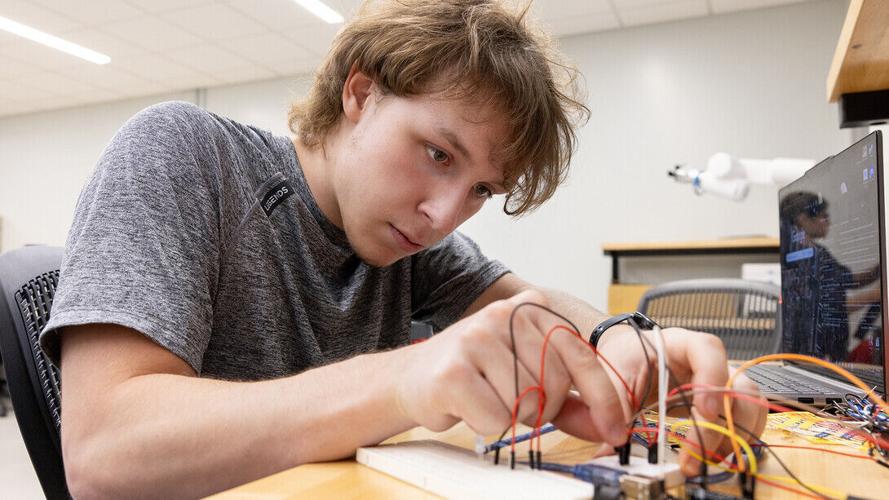
Partnerships among K-12 school systems, tribal colleges, community colleges, industry and the University of Nebraska–Lincoln will help educate employees to work in this future bioeconomy.
“This Engines grant will allow us access to funding to be able to ... help with the needs for workforce development in the area,” said Tammy Mittelset, statewide education and career pathways coordinator in the College of Agricultural Sciences and Natural Resources.
“It’s about helping students get access to opportunities ... and allowing them to see their futures in our states and how to take their education and their knowledge that they learn and apply it to careers of the future,” she said.
Misty Wehling, co-director of the biotechnology program at Southeast Community College and a member of the leadership team, said the project will help develop “seamless pathways” for community college students to enter the bioeconomy workforce or to pursue further education.
A well-educated workforce also could attract more companies to invest in Nebraska, Wehling said.
Husker biochemist Buan said that from her perspective, “our job is to try to help identify the talent so that we can be sure we’re training the workforce of the future.”
Faculty members also have important roles in conducting the cutting-edge research of today that will be the bioeconomy 10 to 15 years from now, she said.
Government, academic leaders hail project
During more than two years of planning and a rigorous competitive selection process, leaders in both states have been key advocates of the project and hailed its selection by NSF.
U.S. Sen. Deb Fischer said support from the Engines program provides a powerful way to realize shared goals for research, innovation, and workforce and economic development across Nebraska and Iowa.
“Together, Nebraska and Iowa lead the nation in agricultural production," she said. "Because RuralSTAMINA plays to our region’s strengths, this Engines award will help drive innovation in the bioeconomy and, in turn, provide a boost to our farm economy.”
According to Nebraska Gov. Jim Pillen, Engines program investments in use-inspired research, translation of innovations to practice and workforce development are vital to advancing the bioeconomy and spurring rural prosperity in Nebraska and Iowa.
“Improving demand for agricultural products is one of my administration’s top priorities,” Pillen said. “RuralSTAMINA will increase the value of commodities produced by our farmers and ranchers, creating high-quality jobs and tremendous opportunity for the next generation.”
“The RuralSTAMINA initiative is an incredible opportunity for our state, our region and our country,” said Dr. Jeffrey P. Gold, president of the University of Nebraska system. “The strong agricultural economies in Nebraska and Iowa, combined with our natural resources and transportation and energy infrastructure, make the Midwest an ideal location for this important initiative. RuralSTAMINA represents a once-in-a-generation opportunity to look to the future while building on our incredible strength in the bioeconomy sector.”
University of Nebraska–Lincoln Interim Chancellor Katherine S. Ankerson noted that the university is already involved, on numerous fronts, in helping expand the bioeconomy in the state. RuralSTAMINA will catalyze those efforts by bringing UNL and ISU together with other partners in the two states with a substantial investment from the federal government.
"This award is very exciting and a testament to the life-changing research our university contributes to Nebraska,” Ankerson said. “It reflects our land-grant mission to serve and partner across sectors and with entrepreneurs and innovators to strengthen our state. That includes Northeast and Southeast Community Colleges, which will be key in helping develop the bioeconomy workforce all across our region."
RuralSTAMINA was one of 15 Engines finalists that emerged from 300 letters of intent, narrowed to 71 proposals, then to 29 in July 2025. Last winter and this spring, NSF conducted in-person site visits with all 15 finalists.
The project will have a chief executive officer, chief technology officer, governing board, corporate advisory committee and external evaluator.


