

Knowing how to grow an apple is one thing; knowing what to do with it afterward is another.
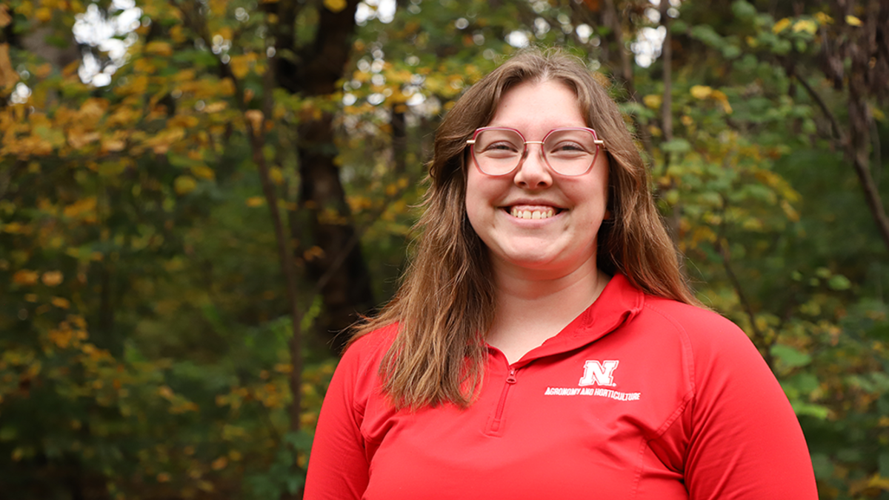
“Our programs are here to teach students how to grow different types of food,” said Christine Barta, plant systems learner and partnership engagement coordinator in the Department of Agronomy and Horticulture. “But there’s a realization students go through afterwards where they think, ‘I’ve grown it — now what?’”
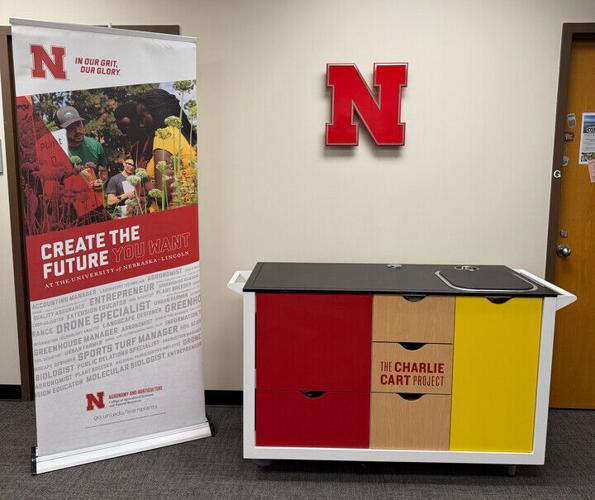
Barta is helping them answer that question with Nebraska’s first Charlie Cart — a mobile cooking station for food and nutrition education. Funded by a two-year, $40,000 Kimmel Catalyst Grant — courtesy of the Richard P. Kimmel and Laurine Kimmel Charitable Foundation — the cart will help bring hands-on cooking lessons and food system education to Lincoln Public Schools classrooms and the Nebraska community.
People are also reading…
Unfamiliar varieties, unmet potential
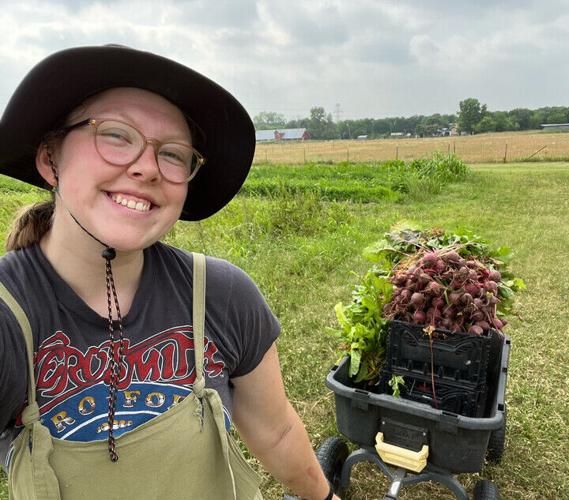
After graduating from the University of Nebraska–Lincoln with a bachelor's degree in horticulture in 2020, Barta worked as a market garden and retail manager at World Hunger Relief, a nonprofit educational farm in Waco, Texas. She regularly faced decisions in choosing interesting produce to grow and sell at their farmers' market stand.
Her farm once had a variety of okra called “Jing Orange,” which has the same qualities as regular okra but a distinct red-orange coloring. Even though there is minimal nutritional difference between the varieties, shoppers ignored it because they were not familiar with it.
The experience led her to pursue a master’s degree in gastronomy before working in a cooperative grocery store’s deli and frozen foods department, where she learned what people value in frozen and prepared foods compared to fresh produce.
“I want all people — young or old — to take ownership of the food system, their diet and nutrition resources,” Barta said. “Working with young people in our community is the first step in giving them the confidence to provide for themselves.”
Connecting with students through cooking
The Charlie Cart is how Barta plans to bring food education into classrooms. The cart is a fully operational kitchen, including a convection oven, hot plate, high-quality blender and supplies for up to 20 students to participate in lessons. The Charlie Cart Project provides educators with lessons, training, support and a nationwide network of food educators. Many of the collaborative recipes explore ingredients across traditions, cultures and religions.
Every year, field trips become more expensive, but by bringing the Charlie Cart to students, they get a novel experience in the classroom.
“For a lot of kids, food magically appears because that’s what their parents brought home, and for some, there’s not enough food at home at all,” Barta said. “I’m going to show them how to use what their parents brought home from the store and what can be grown or foraged.”
The cart also helps with Barta’s recruitment and retention initiatives. Exploring food topics is an easier way to engage with students than talking about soil or an abstract agronomic concept, Barta said. They are more willing to engage and see what the department is about if cooking is involved. A lesson that starts with food is one that she hopes will spark a student’s interest in specialty crops, plant biology or even becoming the next Honeycrisp apple breeder.
Rolling the Charlie Cart into classrooms
As part of the grant, Barta is partnering with Kimmel Orchard and Vineyard, a nonprofit educational farm, to instruct a professional development seminar on June 30, 2027, for Lincoln Public Schools sixth-grade science teachers who will be teaching a unit on apple genetics next school year. Not every apple is grown to be eaten fresh, so Barta will show teachers how genetics shape an apple’s eating and cooking qualities and the different ways apple varieties can be used.
“At the Kimmel Foundation, we are always looking for meaningful ways to connect our agricultural heritage with education,” said Len Weyeneth, president of the foundation. “Awarding this grant to Christine Barta and collaborating with her for the LPS professional development day does exactly that. We are proud to support her work in translating apple genetics and horticulture into engaging classroom curriculum and experiences that will benefit both teachers and students across Lincoln.”
Barta is excited about the projects she will be able to incorporate the Charlie Cart into, and the first classroom she will bring it to is her own.
“I’ll be teaching our incoming freshmen that you can prepare nutritious, delicious food without having expensive or outlandish equipment,” she said. “Even if a student decides to never grow a crop, they’ll be able to support those who do.”
She also plans to use it for live cooking demonstrations at the Husker Produce Farm for community members and students on campus. In June 2027, the Charlie Cart will join her food system camp, addressing student feedback she received from last year’s attendees.


