NEW YORK — A Washington state resident has bird flu, and it's a different type than what was seen in previous infections, state health officials said Friday.
People are also reading…
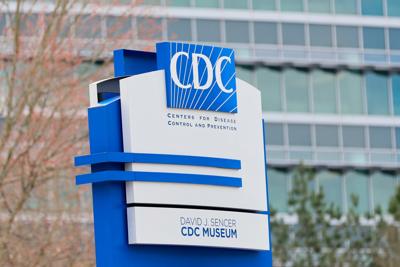
A sign with the Centers for Disease Control and Prevention logo is displayed March 2 at the entrance to the agency's headquarters in Atlanta.
Everything you need to know about bird flu
In early 2024, the bird influenza that had been spreading across the globe for nearly three decades did something wholly unexpected: It showed up in dairy cows in the Texas Panhandle.
A dangerous bird flu, in other words, was suddenly circulating in mammals—mammals with which people have ongoing, extensive contact. "Holy cow," says Thomas Friedrich, a virologist at the University of Wisconsin–Madison. "This is how pandemics start."
This bird flu, which scientists call highly pathogenic avian influenza, or H5N1, is already at panzootic—animal pandemic—status, killing birds in every continent except for Australia, Knowable Magazine explains. Around the world, it has also affected diverse mammals including cats, goats, mink, tigers, seals and dolphins. Thus far, the United States is the only nation with H5N1 in cows; it's shown up in dairies in at least 17 states.
In all of known history, "This is the largest animal disease outbreak we've ever had," says Maurice Pitesky, a veterinary researcher at the University of California, Davis.
The virus, which emerged nearly three decades ago, is now creating upheaval in the poultry and dairy industries and making economic and political waves due to the fluctuating price of eggs. But there's more at risk here than grocery-store sticker shock. As it has journeyed around the world on the wings of migrating birds, the virus has infected more than 960 people since 2003, killing roughly half of them. Since the start of 2024, it's infected dozens of people in the United States—mainly farm workers—and it killed its first person stateside in January of 2025.
So far, H5N1 flu hasn't acquired the key trick of passing with ease from person to person, which is what could enable a human pandemic. For now, both the U.S. Centers for Disease Control and Prevention and the World Health Organization rate the public health risk as low. But the situation could change.
"The thing about this virus is, every time we think we know what's going to happen, it does something totally unexpected," says Michelle Wille, a virus ecologist at the WHO Collaborating Centre for Reference and Research on Influenza in Melbourne, Australia. "And that's the only consistent thing I can say about it."

One and done—or a 'nasty bastard'
Biologically, H5N1 isn't so different from any other influenza A virus—the type that resides mainly in wild birds, as well as bats, and has occasionally jumped into human populations. It contains eight pieces of genetic material encoding 11 known proteins. Two proteins, the "H" and the "N" ones, stud the virus's exterior. H stands for hemagglutinin: It sticks to a cell's sugars so the virus can gain entry. N is for neuraminidase: It allows newborn viral particles to exit the cell.
But there's lots of possible variety. The influenza A virus has at least 19 options for the H protein and 11 for the N protein, most of which are present in the various flu strains infecting wild waterfowl. H5N1 flu has version 5 of the H protein and version 1 of the N protein.
There are also variants for the other genes. If two different flu viruses meet in a cell that they've both infected, they can swap genes back and forth, creating new kinds of flu offspring.
Thus, all sorts of influenza A viruses infect the guts of wild waterfowl, usually without harm to the birds. But the viruses can cause trouble if they move into other creatures.
A few decades ago, scientists thought they had a handle on what would happen if some bird influenza A virus spilled over into other species. In domestic poultry, it could turn nasty, but it was generally a "one-and-done" situation, says Bryan Richards, emerging disease coordinator at the U.S. Geological Survey's National Wildlife Health Center in Madison, Wisconsin. What happened in past instances was that all the farm birds would die, the virus would run out of hosts—the end.
And the leap from birds to humans is not easily made. Scientists had long assumed that to infect people, an avian influenza A virus would have to trade genes with another virus in an intermediate species, like a pig, to adapt to mammalian biology.
So back in 1996, when domestic geese in Guangdong province, China, came down with H5N1, it was hardly cause for worldwide alarm.
But a year later, in Hong Kong, a 3-year-old boy died after suffering high fever and pneumonia. It took experts from around the world three months to identify the virus. At first, no one believed it was H5N1, says Robert Webster, a virologist and emeritus professor at St. Jude Children's Research Hospital in Memphis, Tennessee, who led one of the teams that made the ID. A virus with an H5 was supposed to be a chicken virus. But this H5N1 infected 18 people and killed six of them.
"This was a nasty bastard," says Webster.
Webster and other experts descended on Hong Kong, where they protected themselves by inhaling inactivated H5N1 virus obtained from that first case, as Webster recounts in the Annual Review of Virology. They learned that the boy's family had visited a live bird market, and testing identified more H5N1-infected birds in those markets and on farms. It had apparently arrived in ducks from China.
"What blew everyone's mind, in 1997, was that humans clearly got infected with the avian virus, skipping the pig step," says Friedrich.
Hong Kong killed all the poultry. That particular viral lineage was snuffed out.
Baffled by viral curveballs
But its parent, back in mainland China, remained. And the vast viral lineage it spawned would continue to defy scientists' expectations. "This wasn't the one-and-done," says Richards. "The virus keeps throwing curveballs."
H5N1 spread from farm to farm. It continued to infect people, usually those in very close contact with their domestic birds. Then, in 2005, the virus lobbed another curveball: It spilled back into wild birds, by now in a form altered enough to be deadly to them—killing thousands of bar-headed geese, gulls and great cormorants in China's Qinghai Lake Nature Reserve. "That," says Richards, "set the stage for where we are today."
More birds, likely both wild and domestic, brought H5N1 into Europe and Africa. Through genetic mixing and matching, H5 hooked up with other partners, like N8, for a time. In late 2014, migratory birds brought H5N8 from Asia to the Pacific Coast of North America, where H5 also hooked up with an N2, and the outbreak spread across several states before fizzling out.
The virus continued to spread in Asia, Europe and Africa, usually as H5N8, with a bit of H5N6. In 2020, reports of H5-containing virus infections in wild and domestic birds started to rise. A new variant of the H5 gene, called 2.3.4.4b, was first spotted in the Netherlands. Viruses carrying this H5 seem to have a particular ability to cross over and infect mammals, says Friedrich.
By 2021, the 2.3.4.4b variety of H5 was back with a form of N1. "From there, we started seeing this mass spread event," says Wille. The virus arrived in North America in late 2021, this time to stay.
The panzootic had begun.
Issues of trust, and a matter of time
For the general public, the main advice experts offer is to not consume raw milk or undercooked poultry products. Though no human infections from raw milk or undercooked food have been reported to the CDC as of spring 2025, the virus may have been transmitted via raw poultry products in a small number of cases in Southeast Asia, and it has infected cats that drank unpasteurized milk. Pasteurization kills the virus; so does cooking of eggs, chicken and beef.
The U.S. does have some protections ready, including a stockpile of personal protective equipment, antiviral medication—Tamiflu reportedly works on this virus—and the ingredients for making human vaccines. Those ingredients include virus bits, as well as chemicals that help stimulate the immune system. These are stored in bulk, and could be assembled into ready-to-use vaccine doses within weeks to months.
Although those vaccine materials were designed using versions of H5N1 flu from the early 2000s, a recent study suggests that they create an antibody response to the newer 2.3.4.4b versions that have spread globally since 2020, and include both B3.13 and the newly circulating D1.1. Scientists are also working on updated vaccines that would more closely match the virus circulating now.
Social factors could also influence the detection of, and response to, a potential pandemic. Many farm workers are undocumented immigrants, making many reluctant to be screened or seek medical attention. "The population we should be surveilling the most is the population we're probably not surveilling at a robust enough level," says Pitesky.
And Friedrich notes the great paradox of the Covid-19 pandemic: It spawned a society that's less prepared to manage the next outbreak. "The pandemic eroded public trust in science," he says. "There has been a backlash against the power of public health agencies to do what they need to do to control an outbreak."
In early 2025, publication of a CDC report on H5N1 flu spreading from cattle to people was delayed. USDA personnel working on bird flu response were laid off; the department later struggled to reinstate them. And $590 million in funding for an RNA-based vaccine (of the kind that proved successful during the Covid pandemic) was put under review. The changes continue, with the resignation of a top vaccine official within the US Food and Drug Administration in March and movements starting in April to lay off thousands of federal health workers.
A steep toll on wildlife
Regardless of whether H5N1 jumps from person to person sooner, later or never, it's raging in wild animals. In the U.S., thousands of birds of more than 160 native species, including mallards, sparrows, pigeons and bald eagles, have been infected. So have hundreds of mammals of more than two dozen native species, including raccoons, bears and opossums. Some of these get sick, and some die.
Many of these infections are "dead ends," Richards notes: They don't pass the virus on. It's mainly far-flying ducks that have done that.
By late 2022, H5N1 had entered South America and was thundering down the continent's Pacific coast. "It then traveled the 6,000-kilometer spine of South America in six months, so that's very fast for a virus that's not assisted by planes," says Wille. It hit the tip of South America and jumped to Antarctica.
En route, it killed 40 percent of Peruvian pelicans, at least 24,000 South American sea lions and more than 17,000 southern elephant seal pups.
Wild birds have been affected around the world, and even waterbirds, which normally harbor influenza A without symptoms, have suffered. Though a full census is lacking, individual examples are sobering. The population of great skuas, found primarily in Scotland, is down by a reported 75 percent. An outbreak in California condors in 2023 killed 21 animals, in a species with fewer than 1,000 in existence. "An event like that could change the course of a species," says Wille. "Are they going to come back or not?"
H5N1 hasn't reached Australia or New Zealand, but Wille thinks it's just a matter of time. For the world, the future of this virus, with its propensity to defy expectations, is up in the air. "I think we're on the precipice of something," says Wille. "What that something is, I'm not sure."
This story was produced by Knowable Magazine and reviewed and distributed by Stacker.