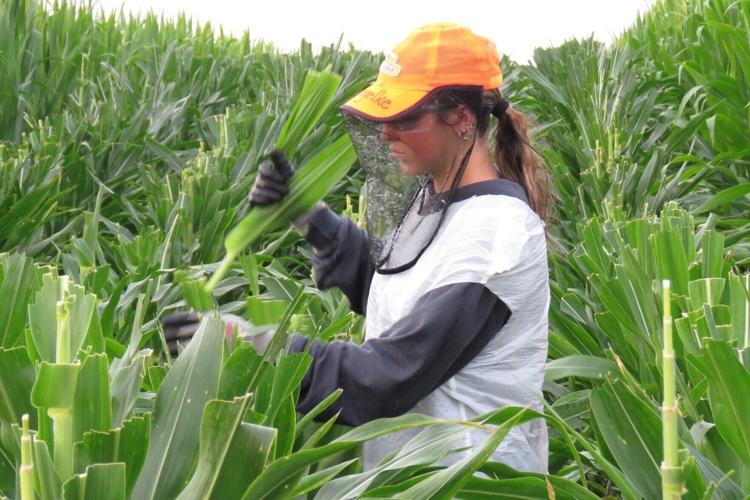
Mckinley Segelke of Minden pulls a tassel from a "female" cornstalk to ensure it won't pollinate itself. Fields growing seed corn are laid out with a "male" row - with desired pollination genetics - and four female rows. Machine cutting removes 90-95 percent of unwanted "female" tassels, but the rest must be removed by hand.
LORI POTTER, FLATWATER FREE PRESS
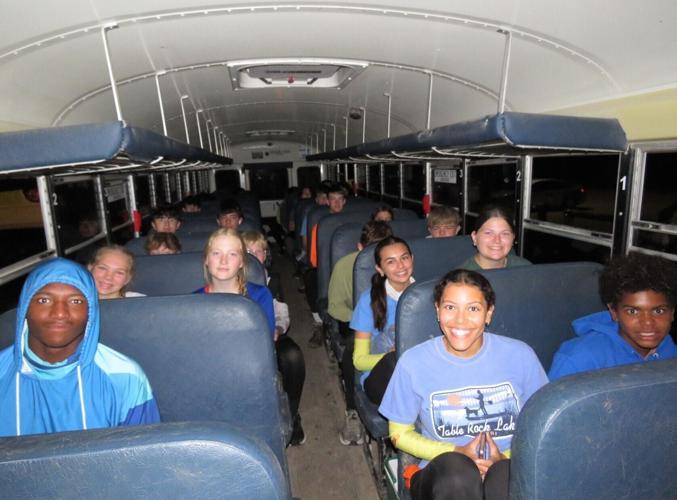
Daily for about three weeks in July and early August, detasselers board Hagan buses at 5:30 a.m. - three at Kearney and one at Minden - to arrive at an area cornfield by sunrise. On most days, they detassel in more than one field and work until early afternoon.
LORI POTTER, FLATWATER FREE PRESS
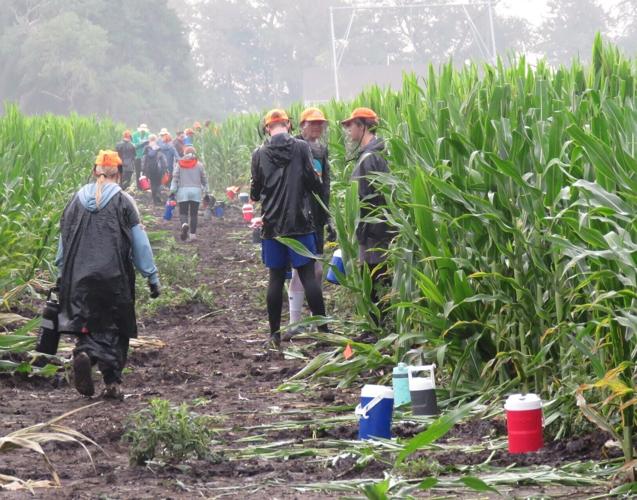
On a hazy, humid July 30 morning, Hagan detasselers stopped to visit and headed down the field for their next row assignments. Rain overnight in the Minden area and earlier irrigation made rain coats or plastic garbage bags important gear for walking through the cornfield.
LORI POTTER, FLATWATER FREE PRESS
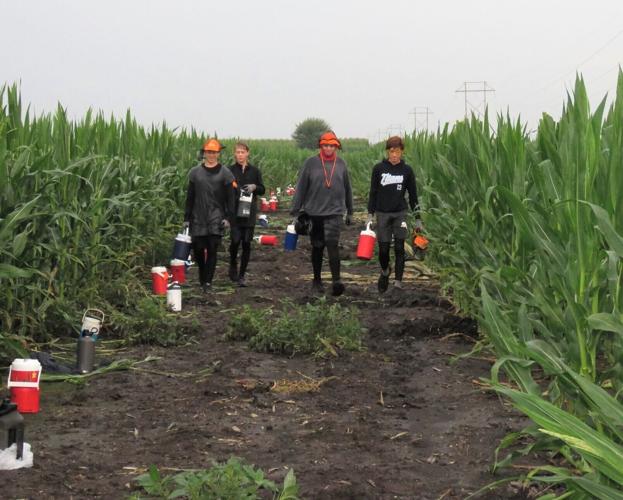
Detasselers mostly wear their own clothes, such as long pants and tennis shoes. They also are provided safety equipment by Hagan Detasseling that includes orange wide-brimed hats with face netting and protective glasses.
On a warm July morning, three busloads of young people ranging in age from 14 to 25 roll through flashing yellow traffic lights before dawn in Kearney.
See our best Omaha staff photos & videos from July 2026
Mckinley Segelke of Minden pulls a tassel from a "female" cornstalk to ensure it won't pollinate itself. Fields growing seed corn are laid out with a "male" row - with desired pollination genetics - and four female rows. Machine cutting removes 90-95 percent of unwanted "female" tassels, but the rest must be removed by hand.
Daily for about three weeks in July and early August, detasselers board Hagan buses at 5:30 a.m. - three at Kearney and one at Minden - to arrive at an area cornfield by sunrise. On most days, they detassel in more than one field and work until early afternoon.
On a hazy, humid July 30 morning, Hagan detasselers stopped to visit and headed down the field for their next row assignments. Rain overnight in the Minden area and earlier irrigation made rain coats or plastic garbage bags important gear for walking through the cornfield.
Detasselers mostly wear their own clothes, such as long pants and tennis shoes. They also are provided safety equipment by Hagan Detasseling that includes orange wide-brimed hats with face netting and protective glasses.